
Brazing and welding both join metal, but they do it differently enough to change your part’s strength, distortion, and material options. Welding melts the base metal; brazing flows a lower-melting filler between surfaces without melting them. This comparison helps you specify the right joint before the drawing goes to the floor, because rework after welding is expensive.
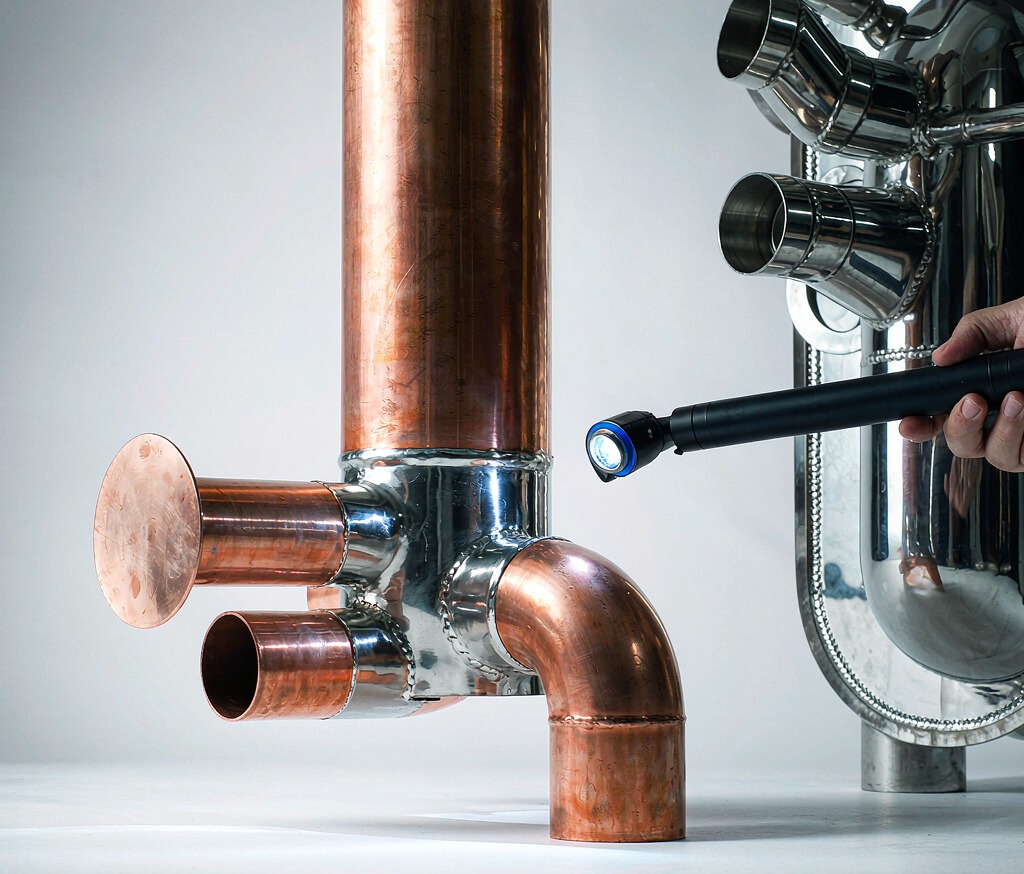
How Brazing and Welding Join Metal
Welding fuses the parent metal, often with filler, into one homogeneous joint. Brazing heats the assembly below the base metal’s melting point and pulls filler by capillary action into the gap. A brazing service joins without melting the parts; a TIG welding service fuses them directly. The heat difference is the heart of the decision.
Heat Input and Distortion
Welding pumps in high heat, which can warp thin sections and alter nearby hardness. Brazing runs cooler, so distortion and heat-affected zones stay small, a real advantage on tight-tolerance assemblies. For repeatable heat control at scale, robotic welding keeps parameters consistent part to part, and vacuum brazing removes oxidation for clean, strong joints on sensitive alloys.
Joint Strength and Service Limits
A well-made weld can match base-metal strength; brazed joints are strong but below the parent metal and weaker at high temperature. For structural loads, welding or MIG welding leads; for sealed, lower-load joints, brazing is plenty and cleaner. Always check the service temperature, because brazing filler softens long before steel welds do.
Dissimilar Metal Joints
Brazing excels at joining unlike metals, copper to steel or stainless to carbon, because it never melts either base. Welding dissimilar metals risks brittle intermetallics unless carefully controlled. This is where brazing’s low heat really pays off, letting you combine materials for cost or performance without a weak weld.
Filler and Clearance Control
Brazing demands a tight, consistent joint clearance, typically 0.05 to 0.2 mm, for capillary flow. Welding is more forgiving on fit-up but needs joint prep. For framed assemblies, spot welding or a full welded assemblies build combines speed with strength, and a MIG welding service scales it for production volumes.
Choosing the Right Joint
Weld when the joint must carry load or match base strength. Braze when heat, distortion, or dissimilar metals rule. Our welded assemblies guide shows how production joints are specified end to end, and the same guide covers when brazing is the smarter call for thin or mixed-metal parts.
Common Brazing vs Welding Mistakes
The usual mistake is welding a thin, mixed-metal, or distortion-sensitive assembly when brazing would have joined it cleaner and cooler. Welding pumps in heat that warps thin sections and can sensitize stainless near the joint, so reach for brazing when the base metal or the tolerance argues against high heat.
The reverse error is brazing a structural joint that must match base-metal strength, where a weld would have been safer and cheaper to certify. Brazed joints are strong but below the parent metal, so reserve them for sealed or lower-load connections where they perform best.
A third trap is poor fit-up. Brazing needs a tight, consistent clearance for capillary flow; a sloppy gap means a weak joint no matter how good the filler is, so control the tolerance before you heat the part.
Brazing vs Welding Selection Checklist
Use these prompts to spec the joint before the drawing reaches the floor. They mirror the heat and material trade-offs that decide the call.
- If the joint must match base-metal strength, weld it with TIG welding or MIG welding.
- If heat and distortion must stay low on a thin part, choose brazing and keep the clearance tight for capillary flow.
- If you are joining unlike metals, brazing is the safer route because it never melts either base.
- For framed production assemblies, spot welding gives fast, repeatable joints at scale.
Which joint is better for thin stainless?
Brazing. Welding thin stainless inputs high heat that warps the section and can sensitize the alloy near the weld; brazing runs cooler and keeps the part flat and corrosion-resistant.
Frequently Asked Questions
Is brazing as strong as welding?
Not quite. Brazed joints are strong for their size but below base-metal strength and weaker at high temperature. Welds can match the parent metal, so welding leads for structural loads and brazing for sealed, lower-load joints.
Can brazing join different metals?
Yes, better than welding. Because brazing never melts the base metals, it joins copper to steel or stainless to carbon without the brittle zones welding can create, which is its signature advantage.
Which distorts the part more?
Welding, due to higher heat input. Brazing runs cooler, so thin or precision parts distort far less, which is why brazing is favored for tight-tolerance assemblies and mixed metals.
What clearance does a braze joint need?
Typically 0.05 to 0.2 mm. Too wide and capillary action fails; too tight and filler cannot enter. Control the fit and brazing is repeatable and strong; ignore it and joints go weak.
Do I need flux when brazing?
In most air brazing you need flux to dissolve the oxide so the filler flows, but in vacuum or controlled-atmosphere brazing the oxide never forms and flux is unnecessary. Vacuum brazing also leaves a clean joint with no residue to remove, which is why it is favored for sensitive alloys and sealed assemblies where cleanup would be costly.
Ready to Start Your Project?
Get a build-ready quote on your custom metal parts within 24 hours. Share your drawing and our engineers will respond with process, lead time, and pricing.

