
Both CNC machining vs laser cutting turn stock into finished metal, but one is 3D subtraction and the other is 2D profiling. Picking wrong means paying for capability you do not need — or missing capability you do. Here is the clean comparison so you can route a flat plate and a machined block to the right cell from the start.
Process Overview
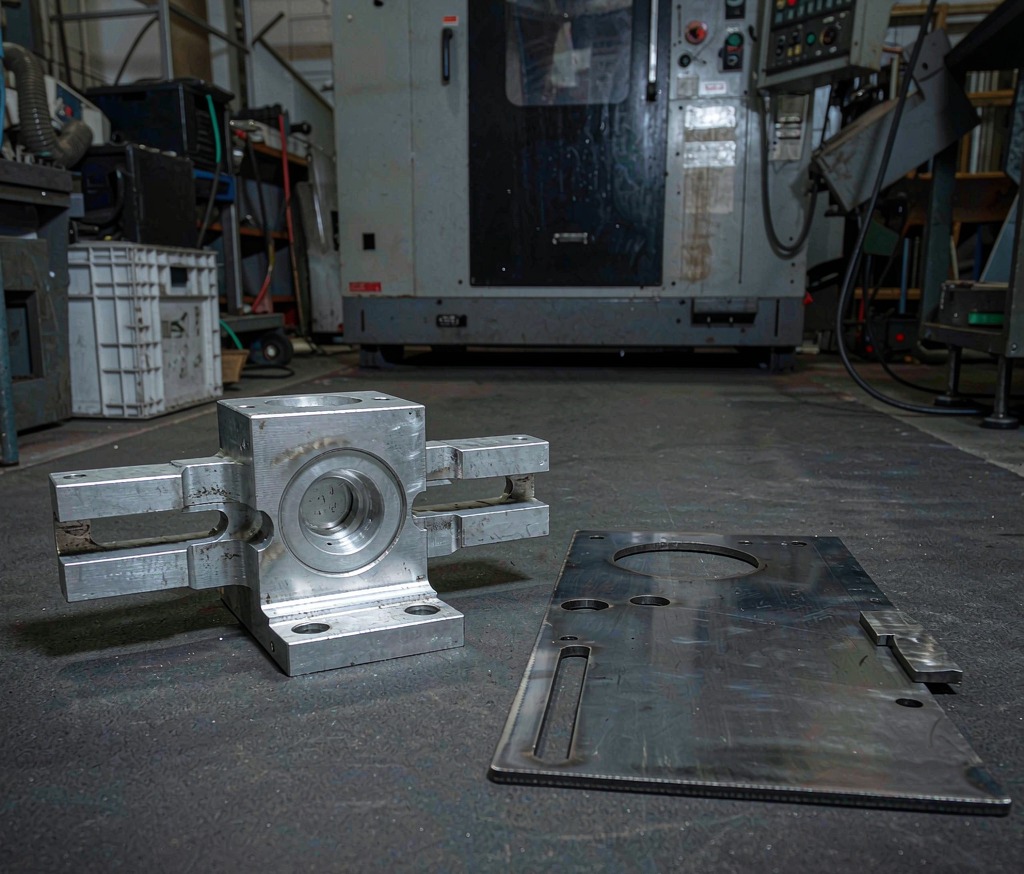
CNC milling and CNC turning remove material in three dimensions to create cavities, threads, and bosses. Fiber laser cutting profiles flat sheet and plate in two dimensions, often followed by bending in a press brake to make the third dimension.
The simplest rule: if the part has height or a pocket, it is machining; if it is a flat profile, it is laser. Many production parts are both — laser the blank, machine the features — which is the most cost-effective routing for a bracket with a counterbored hole pattern.
Geometry and 3D Capability
Laser is flat-only — it cannot make a pocket, a counterbore, or a threaded hole. Machining handles full 3D geometry, including the complex contours possible on 5-axis CNC machining. If the part has any Z-feature, machining is required; laser can only deliver the outline and pierced holes in the flat plane.
Tolerances and Edge Quality
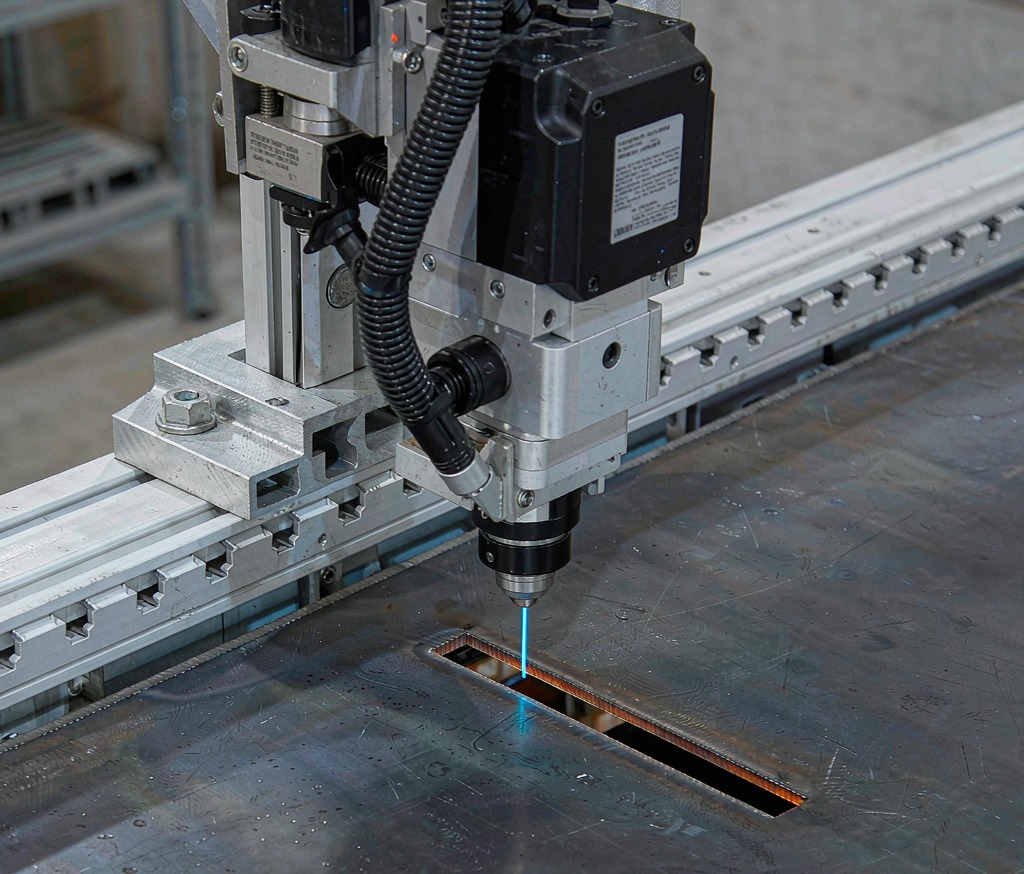
Laser holds ±0.1–0.2 mm on a flat profile with a clean kerf. Machining holds ±0.01 mm and creates real 3D features. For a flat plate that only needs holes and contours, sheet metal laser cutting is plenty accurate and far faster than machining the same profile from solid plate, saving both time and material.
Material and Thickness
Laser suits sheet and thin plate; very thick or reflective stocks may shift to waterjet cutting for a cold edge. Machining handles solids of any thickness in any machineable alloy, including bar and block, so it is the fallback when the section is too thick or the alloy too reflective for a beam.
Cost and Throughput
Laser is dramatically cheaper per flat part at volume — seconds per profile versus minutes of spindle time. Machining costs more per part but delivers parts laser simply cannot. Our CNC punching line is even faster still for high-volume perforated blanks where a turret beats a beam.
How to Decide
If the part is flat with holes and contours, laser (or punch) wins on cost. If it has pockets, threads, or 3D form, machining is the only route. Our CNC machining services and laser cutting services pages detail both, and sheet metal fabrication explains how they combine in a real production cell with bending and welding.
Mixed Routing for Real Parts
Most production brackets are neither pure laser nor pure machining. The efficient cell laser-cuts the outline and pierced holes from sheet, then a machining center opens the counterbores and threads that the beam cannot make. This split keeps material cost low and accuracy high without paying spindle time to rough the profile.
Design for it deliberately: give the laser generous hole sizes and let machining own the tight features. Our sheet metal fabrication process chains cutting, bending, and machining so the part moves through one flow instead of three vendors, which is where the real savings appear.
Drawings That Favor Each Method
You can steer cost at the design stage. A drawing with all features in one plane and loose Z-tolerance is a gift to laser; a drawing with deep pockets and tight bores belongs to machining. When both appear, split them deliberately and label which features are laser-cut and which are machined so the shop quotes the right process instead of padding for uncertainty.
Designers who specify a single all-machined part “to be safe” often pay two or three times the necessary cost on high-volume sheet. A five-minute review of the feature list usually reveals that most of the part is flat and only a few holes need the spindle, which is the signal to route it as laser-plus-machine.
Supplier Questions to Ask
Before you award the job, ask each shop how they would split your part between laser and machining, and why. A confident answer shows they optimize for your cost rather than their available machine. Also ask about secondary operations — deburring, bending, anodizing — because the vendor who chains them in one flow will usually beat three separate suppliers on both price and lead time for a real production bracket.
Cost Transparency at Quote Time
Ask for a quoted process split so you can see how much of the part price is cutting versus machining versus finishing. That breakdown exposes whether a “machined” quote is really mostly laser with a little spindle time, and it lets you challenge any padding. Transparent shops welcome the question because it proves they optimized the route instead of defaulting to the most expensive capable machine.
FAQ
Can laser cutting make threads?
No — threads and pockets require CNC machining; laser only profiles flat stock in two dimensions.
Which is cheaper per part?
Laser, by a large margin, for flat parts at volume; machining is priced per spindle minute and setup.
Can both be combined?
Yes — laser-cut the blank, then machine or bend the features. That is standard practice for cost-effective brackets.
Ready to Start Your Project?
Get a build-ready quote on your custom metal parts within 24 hours. Share your drawing and our engineers will respond with process, lead time, and pricing.

