
CNC machining and metal injection molding (MIM) sit at opposite ends of the make-versus-buy spectrum for metal parts. Machining starts from solid stock and removes what you do not need; MIM molds near-net shape from powder. This comparison weighs no-tooling flexibility against high-volume unit cost so you can choose with confidence, and avoid a tooling bill you cannot undo.
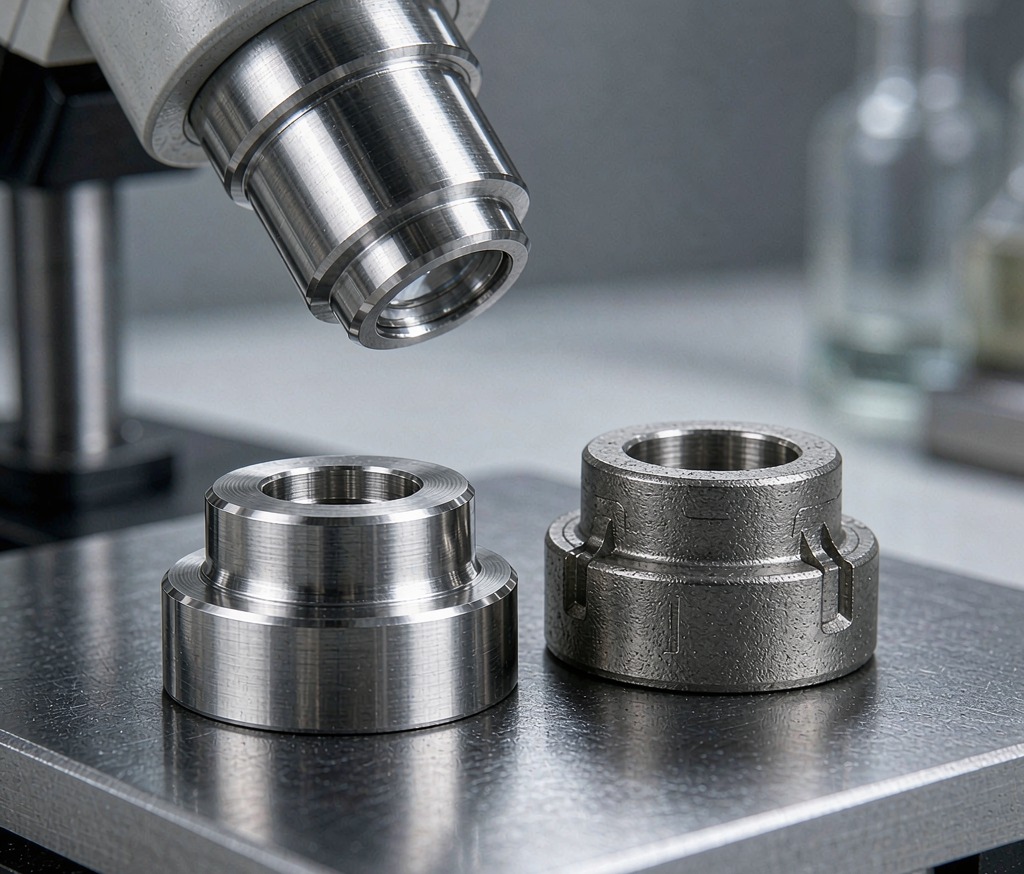
Subtractive vs Net-Shape Molding
Machining is geometry-free: send any CAD and a CNC milling or CNC turning center cuts it, no tooling. MIM needs a mold, so the first part carries tooling cost but every later part is cheap. That split defines the whole economic story, and it is why the right answer changes as your volume climbs.
Tooling Cost and Break-Even Volume
Machining has near-zero front-end cost, ideal for prototypes and spares. MIM tooling runs into the thousands but pays back somewhere in the low tens of thousands of parts. If you need a handful or a frequently revised design, machining wins; if you need a steady stream, a metal injection molding service pulls ahead. Plot your annual volume against the tooling and you see the crossover clearly.
Material Flexibility
Machining works on almost any metal you can buy as bar or plate, from aluminium to Inconel. MIM is limited to feedstock alloys, though that now includes stainless, tool steel, and tungsten. For exotic one-offs, machining is the safe call; for standard alloys in volume, MIM competes hard and often wins on unit cost once the mold is paid.
Complexity Each Process Handles
MIM forms thin walls, undercuts, and fine features that machining would need many setups to cut. Machining handles larger parts and tighter tolerances on critical faces. A small stainless hinge with tiny ribs is MIM territory; a larger bracket with precision bores suits machining finished by surface grinding. Complexity per dollar is where MIM shines on small parts.
Tolerances and Surface Finish
Machining holds plus or minus 0.025 mm readily and leaves a clean cut face. MIM holds about plus or minus 0.3 percent as-sintered and may need light machining on a sealing face, plus a deburring pass after CNC drilling and milling where features are added. For a true bore, CNC boring from solid is hard to beat, which is why machining keeps the precision-critical jobs.
Choosing From Prototype to Production
A common path is machining for proof, then MIM for production once the design freezes. Our prototype machining service bridges that gap, a full CNC machining service scales with you if volumes never justify a mold, and our investment casting vs CNC machining note covers the bigger-part alternative when MIM is too small.
Common Machining vs MIM Mistakes
A frequent mistake is tooling up for MIM on a design that is still moving, then paying for a second mold when the part changes. Machine the early volumes and move to MIM only after the geometry freezes. The reverse error is machining a stable high-volume part for years when a mold would have cut the unit cost sharply.
The other trap is assuming MIM cannot hold tolerance. It holds plus or minus 0.3 percent as-sintered and needs machining only on sealing faces, so judge it on the real feature, not on a general rule, and you will often find it beats machining on the small, complex part.
Machining vs MIM Selection Checklist
These questions point to the cheaper process for your actual volume. Answer them before you commit to a mold or a bar.
- If you need fewer than a few thousand parts, or the design still changes, stay with CNC milling and CNC turning to avoid tooling cost.
- If volume is steady and the part is small and complex, a MIM injection molding tool pays back and drops unit price.
- If the part needs exotic alloy in low volume, machining is the only practical route because MIM feedstock may not cover it.
- Finish precision bores and sealing faces with surface grinding whether the shape is machined or molded.
Can I prototype in machining and switch to MIM later?
Yes, and it is common. Machine the first articles to prove the design, then shift volume to MIM once it is frozen. Keep the interfaces identical so the molded part drops into the same assembly.
Frequently Asked Questions
When does MIM become cheaper than machining?
Typically in the low tens of thousands of identical parts, once mold cost is spread out. Below that, machining’s zero tooling keeps it ahead, which is why prototypes are almost always machined.
Can MIM make large parts?
MIM is best below roughly 100 grams per part. Larger parts are better machined or cast, since mold size and sintering shrink make big MIM parts uneconomic and hard to control.
Which is better for a prototype?
Machining, every time: no tooling, fast turn, any material. Move to MIM only after the design is locked and volume justifies the mold, so you do not pay for a tool you may redo.
Can I mix both in one program?
Yes. Many programs machine the first articles, validate the design, then shift volume to MIM. Keep the interfaces identical so the molded part drops into the same assembly as the machined one.
Ready to Start Your Project?
Get a build-ready quote on your custom metal parts within 24 hours. Share your drawing and our engineers will respond with process, lead time, and pricing.

