
CNC routing is the fast, flexible way to cut and profile sheet, thin plate and composite metal without the heat and edge hardening of laser or plasma. A spinning cutter follows your CAD path to carve contours, slots, pockets and 3D reliefs with clean edges and tight repeatability. It is especially handy for aluminum, brass and thin-gauge steel panels, and for metal-faced composites where heat would delaminate the layer. Huaxiao runs CNC routing alongside CNC milling and sheet metal laser cutting so you get the right process per feature.

What CNC Routing Is and How It Works
A router spindle—often air- or liquid-cooled and running at high rpm—drives a carbide or diamond-coated cutter along X/Y/Z axes under program control. For metal work the feeds are slower and the tooling harder than for wood or plastic, but the principle is the same: subtractive profiling to a digital path. Our custom metal enclosures line frequently uses routing for panel cutouts before bending.
Routing vs Milling and Laser Cutting
Milling is the heavier cousin for blocks and 3D forms; routing excels at sheet and plate profiling with a finer, cooler edge than laser on reflective metals like aluminum and copper. Laser is faster on thin steel but adds a heat-affected zone and struggles with composites. As our sheet metal fabrication guide notes, the choice is about material, thickness and edge quality.
Materials and Thicknesses It Handles Best
Aluminum up to several millimeters, brass, copper and thin steel route cleanly; composites and metal-faced panels are a strong point because there is no heat to delaminate them. For longer extrusions we often combine routing with aluminum extrusion so the profile is cut and drilled in one setup.
Tolerances and Edge Quality
Typical routing holds fractions of a millimeter on sheet profiles, with a clean, burr-light edge that often needs no secondary dressing. With the right tool and climb strategy we avoid tear-out on thin stock. Where a formed part is needed afterwards, our CNC bending and CNC punching services pick up the same blank.
Common Parts and Applications
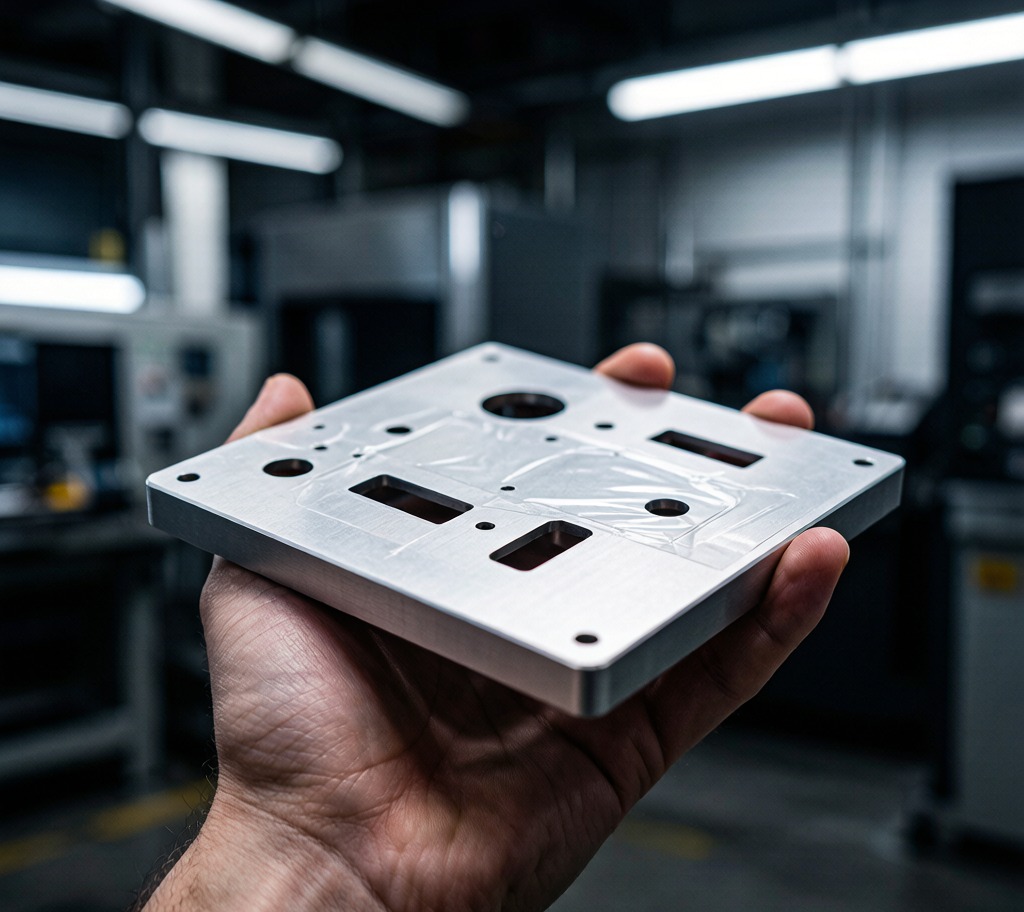
Enclosure panels, instrument fronts, heat-sink plates, signage, gaskets and composite skins are everyday routing work. Many start as custom metal enclosures and grow into a multi-operation program with us. Even short prototype runs benefit, since routing needs no hard tooling and design changes are just a file edit.
Tooling and strategy decide the edge quality. We select cutter material, flute count and climb versus conventional direction for the specific metal and thickness, and we tune rpm and feed to avoid melt, tear-out and burr. On thin aluminum a sharp carbide tool at the right speed leaves a clean break-ready edge; on brass the same settings would load up, so we adjust. Because routing is mechanical and cool, there is no dross to grind off as with plasma, and no heat-affected zone to anneal the edge as with laser on some alloys.
Routing also fits naturally into a multi-step fabrication cell. A panel can be routed for its cutouts, then bent on the same floor, then punched or drilled, then finished—all from one digital model so features stay located to each other. For enclosures and brackets this integration removes the datums and handling errors that creep in when each operation is subcontracted separately, and we treat the routed blank as one step in a finished part rather than a standalone service.
Design Tips for Routable Geometry
- Keep inside radii at or above the tool radius; sharp internal corners need a corner relief.
- Add bridges or tabs on small parts so they do not lift or spin during the cut.
- Specify material and thickness; thin aluminum routes differently from brass or steel.
- Leave clamping margin at the sheet edge so the blank stays secure through the path.
Our CNC machining services and aluminum extrusion services articles cover the upstream processes that often feed a routing job.
When deciding between routing and a laser or punch, the deciding factors are usually material and what comes next. Reflective aluminum and copper favor routing or punching over fiber laser; composites favor routing over any thermal cut; very thin steel favors laser for speed. We map those trade-offs against your downstream bending, welding or finishing so the cut process supports the whole build rather than optimizing one step at the expense of the next.
Frequently Asked Questions
Is CNC routing the same as CNC milling?
Similar controls, different sweet spot. Routing profiles sheet and plate; milling handles solid blocks and complex 3D forms. We choose per part.
What materials can be routed?
Aluminum, brass, copper, thin steel and metal-faced composites all route well; very thick plate is better milled or laser cut.
Does routing heat the edge like laser?
No. Mechanical cutting stays cool, so there is no heat-affected zone and no hardened edge to worry about—important for composites.
What tolerance can I expect?
Fractional-millimeter profiling on sheet is routine; we confirm the number against your drawing during quoting.
Can you route and then bend the part?
Yes. We commonly route the flat blank, then form it on our CNC bending line into a finished enclosure or bracket.
How does cost compare to laser cutting?
For thin steel laser is often faster; for aluminum, brass and composites, routing gives a cleaner edge and avoids reflective-material issues.
Ready to Start Your Project?
Get a build-ready quote on your custom metal parts within 24 hours. Share your drawing and our engineers will respond with process, lead time, and pricing.

