
Custom metal panels are the visible skin of almost every machine: enclosure doors, mounting plates, control faces, and brackets. Getting the cut, bend, and finish right the first time means the panel drops onto the product without rework. This guide covers how to specify holes, bends, and coatings so a panel that looks simple on a drawing actually assembles cleanly. We connect each decision to the laser cutting and bending processes that make it.
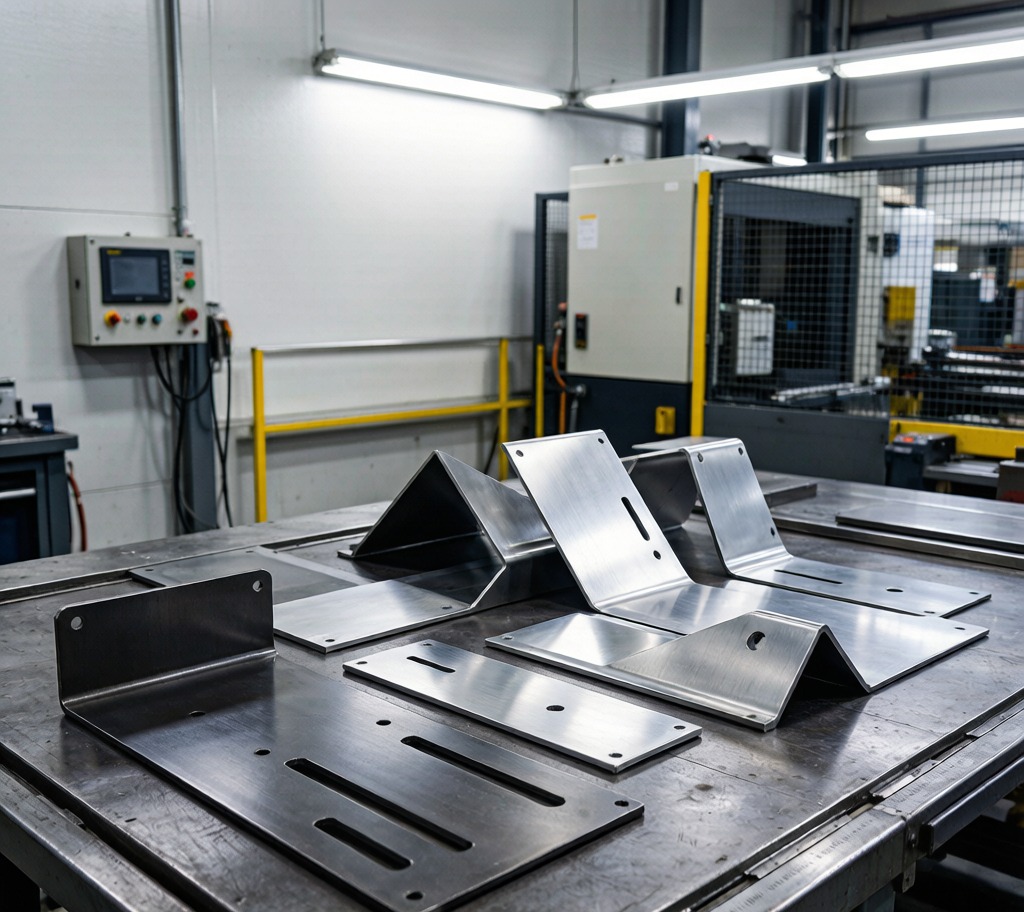
Laser Cutting for Precise Openings
Fiber laser cutting cuts holes, slots, and outlines with a kerf under 0.2 mm, so mounting patterns line up without drilling. It also lets you nest many panels from one sheet, which lowers cost on repeats.
Avoid tiny slots narrower than the material thickness; they cut slowly and dross. We flag these at quote time so the design stays manufacturable.
Bending and Bend Allowance
A panel is rarely flat. CNC bending forms flanges and returns, but the flat pattern must include bend allowance or the hole pattern will not land where you expect. Send the formed view and we unfold it correctly.
Tight bends near holes crack thin aluminum; we add relief or widen the radius to keep the face clean. Pair this with a sheet metal fabrication review before release.
Holes, Threads, and Inserts
Clearance holes are cut directly; threaded holes need a tap or a pressed insert. For sheet too thin to tap, specify clinch nuts or threaded inserts so the joint holds torque. Call out which holes are for looks versus which carry load.
CNC punching is faster than laser for repeated round holes and can lance tabs and ribs in the same hit, which trims cycle time on high-volume panels.
Finishing: Powder, Anodize, Print
Powder coating gives a durable colored skin that hides minor marks; anodizing is for aluminum where you want a hard, thin, color-stable layer. After finishing, screen printing or laser marking adds legends and logos.
If the panel is the face of a larger box, fold the finish into a custom metal enclosure program so color and marking stay consistent across parts.
Material by Stiffness and Environment
Aluminum 5052 bends well and resists corrosion; steel is stiffer per dollar; stainless suits washdown. Pick gauge from stiffness needs, not habit, because thicker sheet costs more to cut and bend.
For outdoor panels, specify the coating system and salt-spray target up front so we select the right pretreat and topcoat.
Tolerances That Assemble First Time
Hold hole positions to +/-0.1 mm and bend angles to +/-0.5 degree for most enclosures. Tighter than that needs fixtures and costs more. Define the datum so the shop measures from the face you assemble from.
A short laser marking step can add a scribe line or serial that helps line operators place the panel correctly the first time.
Quality Control and Inspection
Every custom metal panels order begins with a first-article inspection. We measure the critical dimensions on a CMM or dedicated gauge and compare them to your drawing before any volume runs start. Only after you approve the report do we release production, so the first batch is already at spec rather than a learning curve.
For functional features we add targeted checks, from thread gauging on fasteners to flatness, squareness, and runout on frames and shafts, and we keep a traveller with the lot so a later question can be traced to the exact machine setup. That discipline is what keeps reject rates low across repeat orders.
We also confirm the finish and any marking against the approved sample, because a good dimension on a badly finished part still fails on the line. Surface, color, and legend are inspected alongside the numbers so what ships matches what you signed off.
Lead Time and How to Request a Quote
Quoting custom metal panels is fast when you send a drawing, a sample, or even a marked sketch with the key dimensions called out. We return a price with DFM feedback, a recommended material, and a realistic lead time, usually within one business day, so you can plan the build without waiting on a vendor.
Prototype quantities run in days; production batches scale with material and finish, and we can hold your drawing on file for fixed-schedule replenishment so you keep stock without tying up cash in inventory you do not need yet. Tell us annual volume and we set the cadence.
If you are unsure of the best process, ask. A short call before release often saves a costly rework, and we would rather steer you to the cheaper capable route than quote the one you assumed. The goal is a part that assembles first time at the right cost.
Common Specification Mistakes to Avoid
The most expensive mistake on custom metal panels is over-tightening tolerances the assembly never needed. Every step past process capability adds cost per feature, so call out only the dimensions that locate or seal another part and leave the rest to standard commercial limits. Tight where it counts, loose where it does not.
The second mistake is forgetting the datum and the environment. State which surface everything is measured from, and name the service condition, indoor, outdoor, washdown, or vacuum, so the material and finish are chosen once and not reworked after a field failure.
The third is treating finish as an afterthought. Plating, anodize, or coating change dimensions and must be in the tolerance stack from the start. Tell us the final coated size you need and we will machine to suit, instead of discovering the coat pushed you out of spec at the end.
Frequently Asked Questions
Laser cut or punched holes?
Laser for varied or large holes; punch for many identical small holes at volume.
How tight can bend angle be?
Around +/-0.5 degree standard; tighter needs fixtures and costs more.
Best finish for outdoor panels?
Powder coat over zinc pretreat, or anodized aluminum for lighter weight.
Can you add threaded inserts?
Yes, clinch nuts or helicoils in thin sheet where tapping is not possible.
Do you supply the flat pattern?
Send the formed model; we unfold and confirm bend allowance before cutting.
Ready to Start Your Custom Part?
Send us your drawing or sample and get a competitive quote with DFM feedback, lead time, and material recommendation within one business day.

