
When a steel or iron part must resist abrasion, stick-slip, and corrosion while keeping its shape, few treatments beat a thick chromium layer. Hard chrome plating services deposit a dense, low-friction, high-hardness surface that can extend service life by orders of magnitude. This guide covers when it pays off, how it is applied, and how it compares to the alternatives so you can specify with confidence.
What Hard Chrome Actually Is
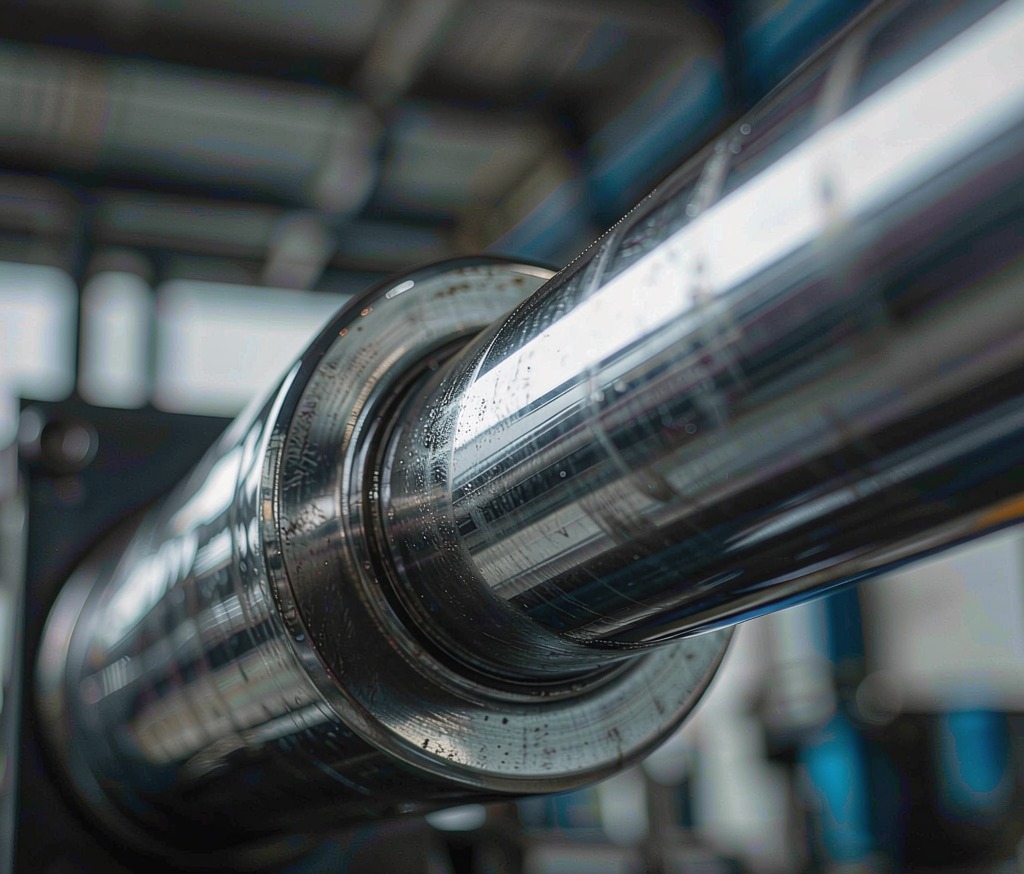
Hard (or industrial) chrome is electroplated chromium applied primarily for engineering properties, not appearance. Deposits typically run 5–250 microns, with hardness around 800–1000 HV—far above most steels. The layer is porous in a controlled way that can hold lubricant, which is why it excels on hydraulic piston rods, mold surfaces, and shaft journals where sliding contact is constant and failure is expensive.
Where Hard Chrome Earns Its Cost
The classic application is hydraulic and pneumatic cylinders, where a mirror rod resists seal wear and corrosion. It is also used to rebuild undersized shafts, restore mold cavities, and provide release on forming tools. Because it adds material, it is the natural choice for salvage as well as new manufacture. Our chrome plating services page details typical thicknesses, QA methods, and the microsection measurement we use to confirm deposit quality on every critical lot.
Hard Chrome vs Electroless Nickel
Both add hard, corrosion-resistant layers, but they behave differently. Electroless nickel plates uniformly on complex internal geometry and is more corrosion-resistant in many chemistries, while hard chrome is harder and has better release and abrasion resistance. If the part is a simple shaft, chrome usually wins; if it is a valve body with internal bores, electroless nickel is safer because it coats the hidden surfaces just as thickly as the exposed ones.
Hard Chrome vs Decorative & Thin Coatings
Decorative chrome is a thin top layer over nickel—pretty but not engineered for wear. For extreme surface performance, DLC (diamond-like carbon) and PVD coatings offer even lower friction, though at higher cost and thinner deposits. DLC coating and PVD coating are best for precision tools and small components rather than large shafts, where hard chrome remains the economical workhorse.
Process Essentials & Limitations
Plating needs a clean, activated substrate and careful racking to avoid thin spots. Hydrogen embrittlement is a risk on high-strength steels, so post-bake is specified for critical parts to drive out absorbed hydrogen. Dimensional growth must be accounted for in the print, and we confirm thickness with microsection and hardness testing before the part ships. Our surface treatment guide compares the full menu of options when chrome is not the right answer.
Combining Hard Chrome with Other Treatments
For parts needing both hardness and a black finish, we often pair chrome with black oxide or follow with black oxide coating on non-plated zones. When the substrate itself needs conditioning first, a prior heat treatment sets the core properties so the plated case has a stable foundation. Hardfacing is the alternative when abuse is so severe that even chrome would wear through.
Specifying Thickness and Acceptance Criteria
Thickness selection is a balancing act. Too thin and the layer wears through before the part’s design life; too thick and you add cost, hydrogen-embrittlement risk, and grinding effort. For hydraulic rods, 20–50 microns is typical; for rebuild or severe wear, 100+ microns is common. We recommend the minimum that meets the duty, then verify by microsection and hardness mapping. Plating uniformity is checked at high and low current-density areas because those are where thin spots hide, and we reject lots that fail the adhesion tape test so you never see the failure in service.
Maintenance, Re-Plating & Life Cycle
Hard chrome is rebuildable, which is one of its quiet advantages. A worn rod or shaft can be stripped, re-plated, and ground back to size, often several times, extending the life of an expensive core component far beyond a single service interval. We support this with documented thickness history so each re-plate knows how much stock remains. For new parts, specifying an allowance for future re-plating at the design stage turns a disposable component into a maintainable one. Where the substrate is too worn for chrome alone, we pair it with heat treatment or move to hardfacing for a thicker wear reserve.
Applications Across Industries
Hard chrome appears wherever a surface must slide, seal, or resist abrasion. Hydraulics and pneumatics consume the most—rods, rams, and cylinders—followed by molding (injection, die-cast, and glass molds), where release and corrosion resistance protect expensive tooling. Printing, paper, and textile machinery use chrome on rolls and doctor blades; oil and gas uses it on valves and downhole tools. In every case the value is the same: a thin, hard skin that lets a far cheaper substrate do the structural work while the surface does the wearing. For lighter-duty corrosion without the hardness, nickel plating is the usual alternative we quote alongside chrome.
Frequently Asked Questions
How thick can hard chrome be?
Industrial deposits commonly reach 0.25 mm or more for rebuild; thinner layers (20–50 microns) suit wear surfaces.
Will it change my dimensions?
Yes—it adds material. We mask and build to the finished size, then grind if needed.
Is hard chrome corrosion resistant?
Good, but not as complete as electroless nickel; micro-cracks can let chloride through, so pair with a barrier where required.
Can you plate on stainless?
Yes, with proper activation. It is often used on stainless shafts for extra wear life.
How does it compare to hardfacing?
Hardfacing adds a thick welded wear layer for extreme abuse; chrome is thinner, smoother, and lower-friction.
Ready to Start Your Project?
Get a build-ready quote on your custom metal parts within 24 hours. Share your drawing and our engineers will respond with process, lead time, and pricing.

