
Metal casting services turn molten metal into near-net-shape parts that would be slow or impossible to machine from solid stock. Sand, die, investment, and gravity casting each solve different problems around geometry, volume, and material. This guide compares the four main processes so you can pick the right casting method — and know when to switch to machining or fabrication instead.
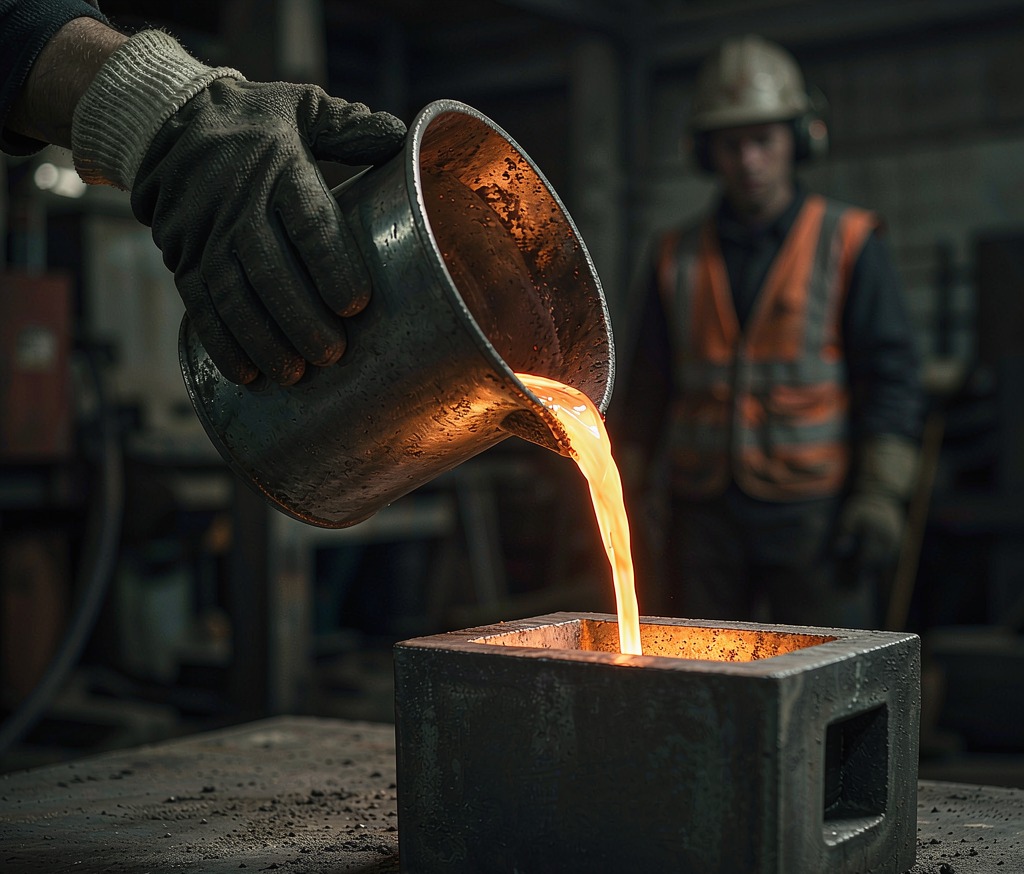
Sand Casting: Flexible and Low-Cost Tooling
Sand casting uses a reusable sand mold to pour ferrous and non-ferrous alloys into large, complex, or low-volume parts. Tooling is cheap and lead times are short, which makes it the default for prototypes, spares, and big components. Dimensional tolerance is wider than die casting (roughly CT8–CT10), and surface finish needs more cleanup, but the process accepts almost any alloy and almost any size. It is the right call when volume is low or the part is too large for a die.
Die Casting: High Volume, Tight Tolerance
Die casting forces molten metal into a reusable steel die under high pressure, delivering excellent dimensional repeatability and thin walls at high volume. It is the workhorse for aluminum, zinc, and magnesium enclosures and housings. Tooling cost is high, but piece price drops sharply once the die is in production. Our die casting services guide covers alloy choice, wall thickness, and draft angles that keep parts release-ready.
Investment and Gravity Casting
Investment casting (lost-wax) produces intricate, near-net-shape parts with tight tolerances and smooth surfaces — ideal for stainless, alloy steel, and aerospace components where machining would waste material. Gravity casting pours metal into a permanent mold under gravity, balancing surface quality and cost for medium runs of aluminum and copper alloys. Compare the two in our investment casting services and sand casting services breakdowns.
Casting vs Machining vs Fabrication
Casting wins when the part is complex, hollow, or large and volume justifies the tooling. Machining wins for tight tolerances on simpler solids; fabrication wins for sheet-based structures. Many production parts combine routes — a casting rough shape finished by CNC, or a fabricated weldment machined to final datum. The right partner maps the part to the lowest-risk, lowest-total-cost process rather than the one they happen to own.
Frequently Asked Questions
Which casting method is cheapest for prototypes?
Sand casting. Low tooling cost and short lead time make it the default for one-off and low-volume parts.
When should I choose die casting?
When annual volume is high enough to amortize the die — typically tens of thousands of pieces — and the geometry suits thin walls and tight repeatability.
Can cast parts be machined after casting?
Yes. Most castings are rough-machined or finish-machined at critical datums to hit tight tolerances the casting alone cannot hold.
What finishes apply to castings?
Shot blasting, powder coating, anodizing (aluminum), plating, and painting are all common depending on alloy and environment.
Quality, Docs, and Finishing
Casting quality lives in the details most buyers never see: gating and riser design, pouring temperature, cooling rate, and shake-out and cleaning. For structural or safety parts, request first-article inspection, material certification to EN 10204 3.1, and dimensional reports tied to your datums. Sand casting and investment casting both benefit from finish machining at critical seats, which we handle on the same floor to protect continuity. Surface preparation matters too: shot blasting cleans the part, then powder coating or plating adds corrosion protection, while aluminum castings often go to anodizing. If your part is large or low-volume, sand casting keeps tooling cost near zero; if it is thin-walled and high-volume, die casting delivers the repeatability. We will state plainly when a process is the wrong fit for your geometry or volume rather than push the one we happen to own, because a wrong process choice is the most expensive mistake in a casting program.
Request a Casting Quote
Share your drawing, alloy, annual volume, and critical tolerances. We will recommend sand, die, investment, or gravity casting — and tell you when machining or fabrication would be the smarter route.
Ready to Start Your Project?
Get a build-ready quote on your custom metal parts within 24 hours. Share your drawing and our engineers will respond with process, lead time, and pricing.

