
Turbine blades are among the most demanding components in all of metal manufacturing. They sit in a stream of hot, high-pressure gas, carry enormous centrifugal loads, and must hold an airfoil shape within tight tolerances for years. Making them calls for a combination of near-net-shape casting and high-accuracy machining. For engineers specifying blades for aerospace engines, power-generation turbines, or industrial turbomachinery, understanding how the two processes fit together explains both the cost and the capability of a supplier.
The economics are unforgiving. A blade is mostly airfoil that does no structural work, yet it must be made from the most expensive alloys and finished to a near-optical profile. Every step that removes material or adds scrap compounds the cost, which is why the cast-then-finish route dominates instead of machining from solid.
Materials Used in Turbine Blades
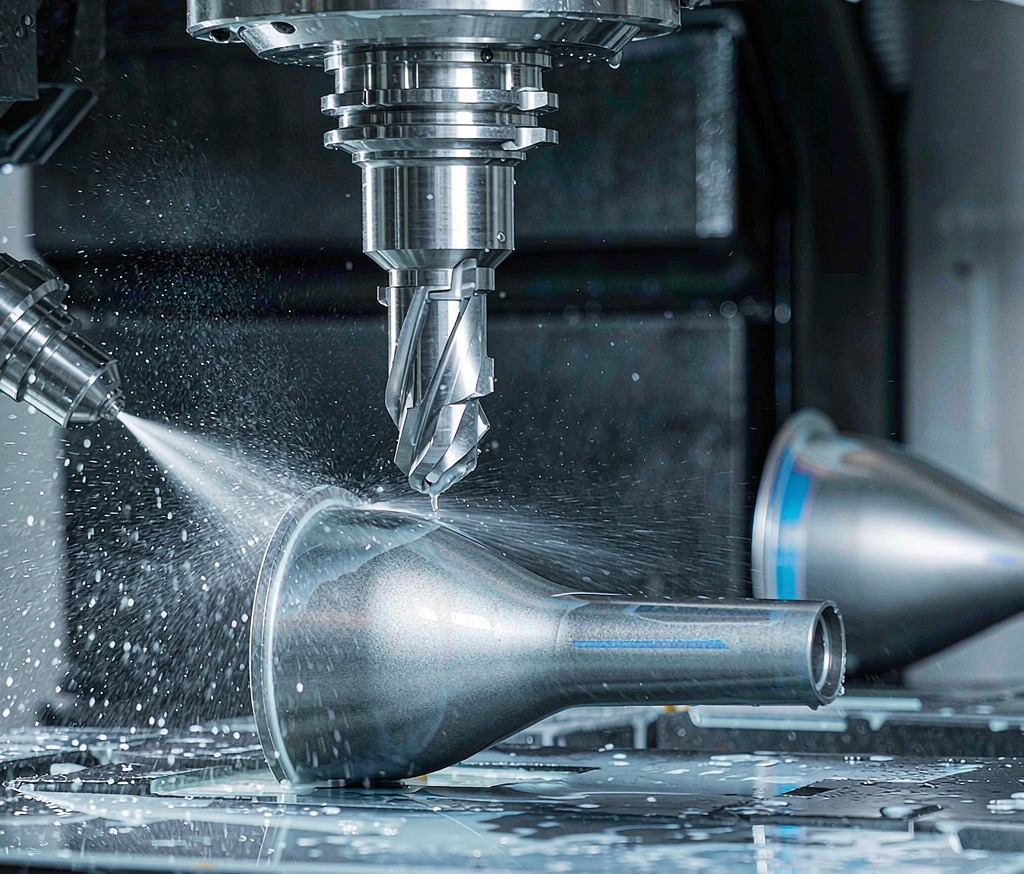
Most blades are nickel-based superalloys such as Inconel or CMSX, chosen for strength at temperature, though titanium appears in cooler compressor stages and steel in some industrial rotors. These materials are notoriously hard to machine, which is why casting dominates the near-net shape. When a program needs a machined superalloy detail, our 5-axis CNC machining cells are set up for exactly this class of work, holding geometry that simpler machines cannot reach.
Investment Casting for Complex Geometry
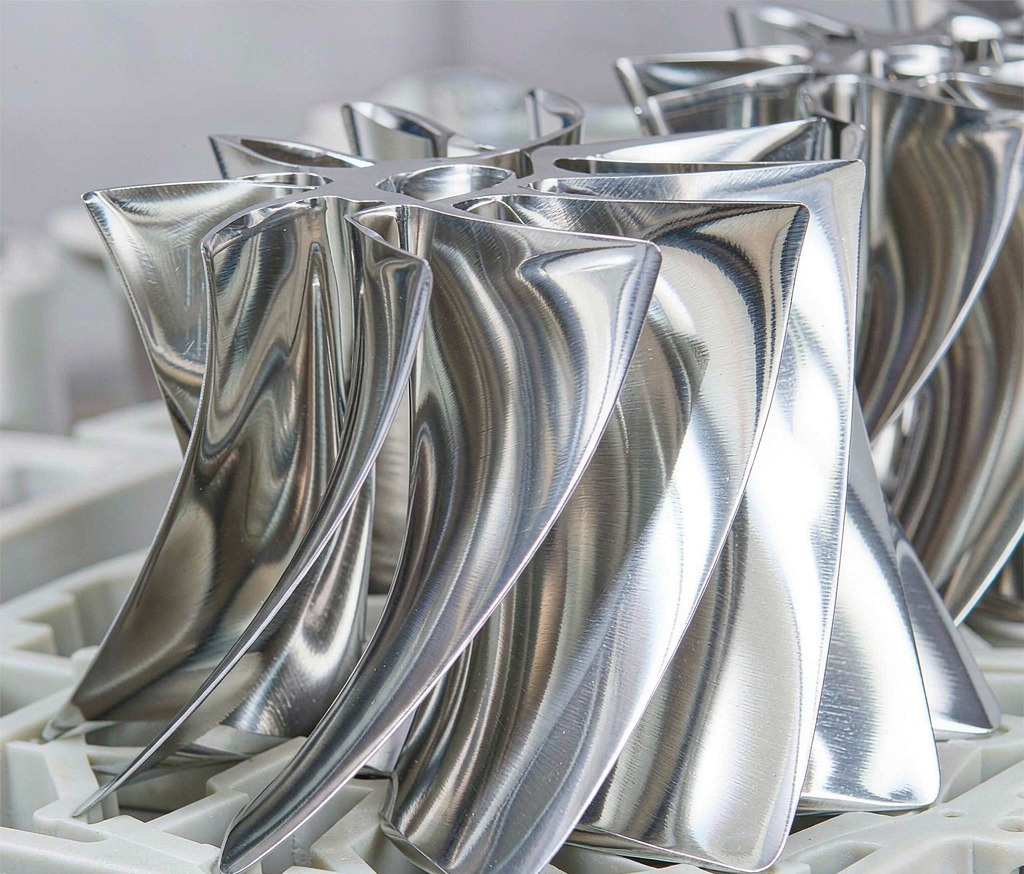
The twisted, cooled airfoil of a modern blade is almost impossible to machine from solid economically. Investment casting builds the shape by pouring molten alloy into a ceramic mold formed around a wax pattern. The result is a near-net blade with internal cooling passages and thin walls. Our investment casting process and broader metal casting capability deliver the complex geometry, after which only the critical surfaces need finishing.
Directional solidification and single-crystal casting take the method further, aligning the grain structure to resist creep at temperature. These variants matter for the hottest stages and are a reason casting, not forging, owns the blade market for gas turbines.
5-Axis CNC Finishing for Accuracy
Cast blades still need machined datum faces, root attachments, and tip profiles to drawing. Five-axis machining trims these in a single setup, avoiding the stacking errors that come from re-fixturing. Tight-tolerance finishing of superalloys often follows a heat treatment cycle so the final shape is stable. Where a blade roots into a disk, a combined forging plus machining route can offer even higher strength than casting alone.
Heat Treatment and Coatings
After shaping, blades are heat treated for grain control and then coated: thermal barrier coatings on the surface, bond coats underneath, and sometimes a tip or leading-edge hardening. These steps are what let the blade survive its service environment. The full route, from CNC machining to coating, is coordinated so the finished blade meets both dimensional and metallurgical specs.
Tolerances and Inspection
Airfoil profiles are checked against a nominal using CMM scanning or optical comparison, and wall thickness is verified where cooling passages demand it. Because the cast shape carries most of the geometry, the machined features are fewer but more critical, which is why single-setup 5-axis work protects the relationship between datum and airfoil.
Cost Drivers in Blade Programs
Blade cost is dominated by material, scrap, and the finish-machining hours. Single-crystal superalloys are expensive, and any casting that fails x-ray becomes scrap at full material cost. Holding the cast shape close to net, then removing only the critical stock, is the main lever on price. Programs that let the supplier influence draft, wall thickness, and datum strategy during design usually see the biggest savings, because the part is easier to make well the first time rather than rescued after.
Choosing a Turbine Blade Supplier
Blade programs reward suppliers who can handle both the cast shape and the finish machined detail under one quality system. Our aerospace machining services explain the controls expected on flight-critical work, and our 5-axis CNC machining services detail the reach and accuracy behind airfoil finishing. For the cast side, see our investment casting services, and for exotic alloys, our titanium CNC machining notes cover adjacent high-strength materials.
Frequently Asked Questions
Why not just machine turbine blades from solid stock?
You can, but the buy-to-fly ratio is terrible and the internal cooling passages cannot be machined economically. Casting the near-net shape and finishing the critical features is faster and cheaper.
Which tolerance can 5-axis finishing hold on a blade?
Critical airfoil and root features are typically held to a few hundredths of a millimeter, with the exact number set by the drawing and the casting draft allowance.
Can the same supplier cast and machine the blade?
Yes, and it is preferred. A single quality system across cast and machine steps reduces handoff errors and simplifies first article inspection.
Plan the Blade Route Early
The best turbine blade programs decide cast-versus-machine tradeoffs at the design stage. Get both processes into the conversation early, and the finished blade is cheaper to make and easier to qualify. Waiting until the print is frozen usually means paying for machinability that the design never allowed.
Equally important is locking the alloy and the casting route before tooling is ordered, because changing a superalloy after the ceramic mold is built is a costly reset. Early alignment between your design team and the foundry is what keeps both schedule and budget intact.
Ready to Start Your Project?
Get a build-ready quote on your custom metal parts within 24 hours. Share your drawing and our engineers will respond with process, lead time, and pricing.

