
416 stainless steel is the free-machining martensitic grade, and 416 stainless steel machining is the go-to route when you need stainless hardness, magnetic response, and good chip control in one package. Common in valve bodies, pump shafts, and hardened fasteners, 416 bridges the gap between easy machining and wear resistance. In this guide we explain the metallurgy, compare 416 to neighboring grades, and walk through the machining and heat-treat workflow that delivers tight-tolerance parts. Start with our stainless steel machining overview if you want the full grade map.
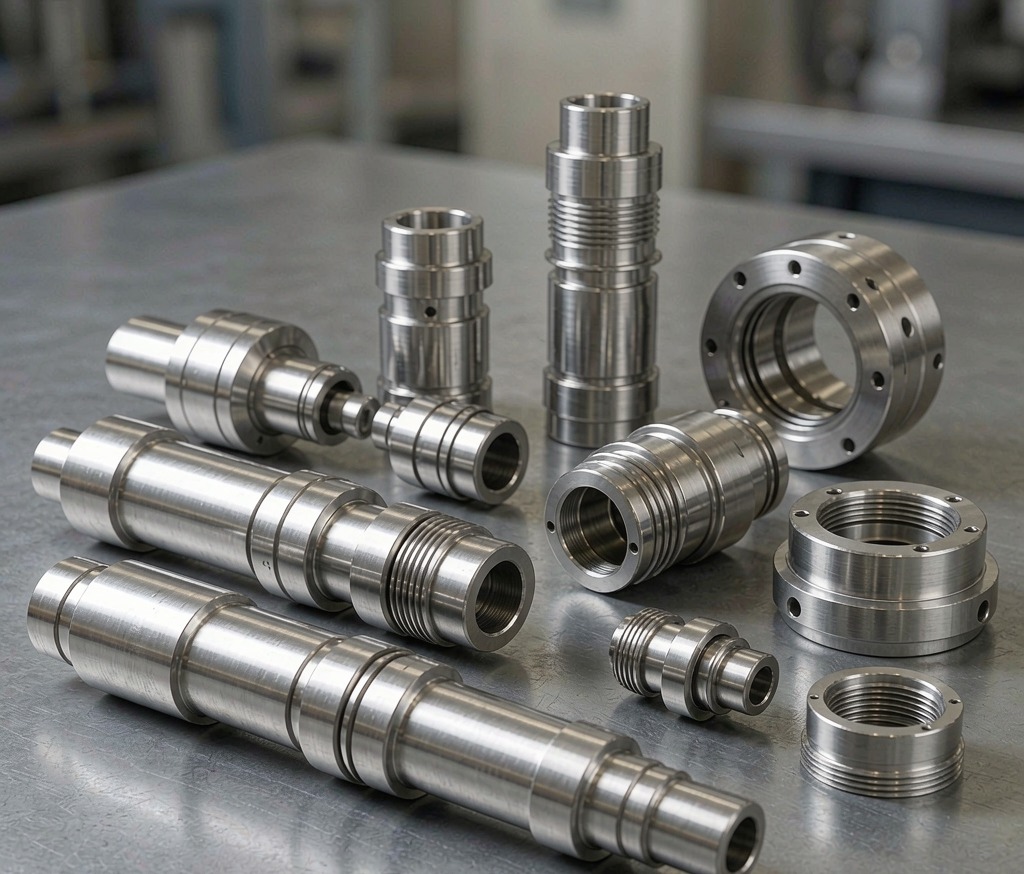
What Is 416 Stainless Steel
416 is a martensitic stainless steel with sulfur added for machinability, giving it roughly 85% of free-cutting performance while still being hardenable by heat treatment. Typical chemistry is 12–13% chromium with 0.15% sulfur, so it resists corrosion better than straight carbon steel yet machines far better than 410 or 420. It is magnetic in both annealed and hardened conditions, which matters for sensor and solenoid applications. Because it hardens, 416 is the stainless choice when a part must survive wear, abrasion, or repeated seating cycles.
416 vs 303 and 420
303 is easier to machine but cannot be hardened; 420 machines worse but reaches higher hardness. 416 sits in the middle: it machines like 303 yet responds to heat treatment for wear resistance. Our 420 stainless steel machining guide covers the higher-hardness end, while 416 is the better default when you need both machinability and a hardened, magnetic part. Choose 416 for valve trim, shafts, and fasteners that see friction; choose 303 when hardness is irrelevant.
Machining Strategy and Tooling
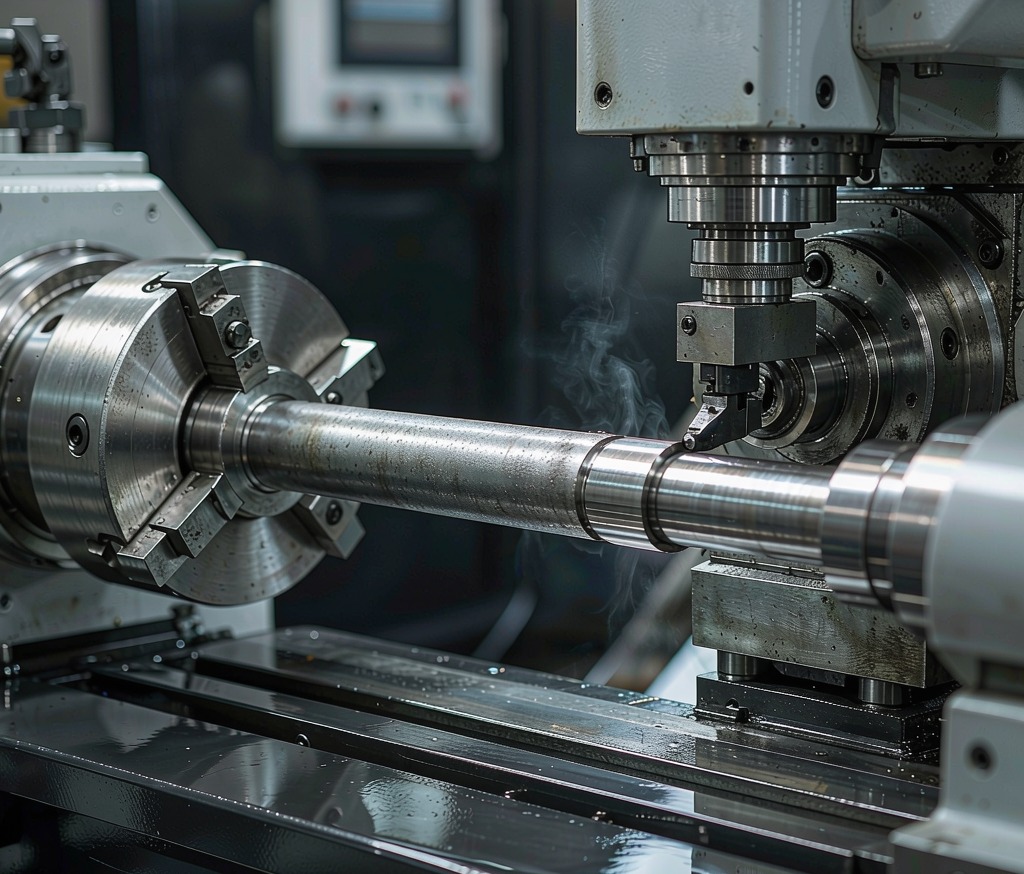
Annealed 416 turns and mills cleanly with coated carbide and moderate speeds. CNC turning forms shafts, threads, and seat diameters, while CNC milling cuts flats, keyways, and ports. Because the grade work-hardens only mildly, consistent feed is less critical than with 304, and 5-axis CNC machining handles complex valve geometries in fewer setups. Keep tooling sharp and use coolant to avoid built-up edge on sulfur-rich surfaces.
Grinding to Tight Tolerances
After hardening, 416 is finished by grinding rather than cutting. Centerless grinding is ideal for long shafts and pins, holding diameters to micron levels and delivering a bright, low-friction surface. For sealing faces and seat lands, cylindrical and surface grinding refine the geometry the lathe established. Planning the grind allowance up front prevents scrap on hardened stock and keeps lead times predictable.
Heat Treatment and Hardening
416 is usually supplied annealed for machining, then hardened by austenitizing, oil quenching, and tempering to roughly 26–35 HRC depending on the application. Heat treatment is what unlocks its wear resistance, but it also introduces movement, so final grinding must follow. A well-planned harden-and-grind sequence is the difference between a shaft that fits and one that does not.
Typical Applications
416 shows up in valve bodies and stems, pump shafts, gears, and hardened fasteners where a magnetic, corrosion-resistant, wear-capable part is required. It is also common in firearm components and solenoid plungers. The combination of machinability before hardening and toughness after makes it a staple for motion-control hardware. Our precision machining services page explains how we hold the tolerances these parts demand.
Design for Manufacturability
Leave generous stock for post-hardening grind, avoid thin sections that warp, and specify threads that can be rolled or cut before heat treatment. Group diameters to reduce setups and use standard sizes where possible. A short call with our engineers before release prevents the most common 416 cost traps.
Quality Inspection for Hardened Parts
Hardened 416 demands verification beyond a caliper check. We confirm hardness with a Rockwell tester on a representative surface, verify diameters on a cylindrical gauge after centerless grinding, and inspect threads with go/no-go gauges. Surface cracks from hardening are checked visually and, on critical parts, by dye penetrant. Building inspection into the workflow—rather than after the fact—prevents a whole batch from shipping out of spec and protects both lead time and trust.
Lead Times and Volume Pricing
Because 416 runs through machining, heat treatment, and grinding, lead time scales with the hardening queue more than the machining itself. Prototypes typically ship in days; production runs benefit from batched heat-treat cycles that smooth cost. Volume pricing improves sharply above a few thousand pieces as setup and tooling amortize. Sharing annual usage up front lets us schedule heat-treat capacity and quote a realistic landed price rather than a best guess.
Specifying Heat Treatment for 416
Hardness is the single most important call on a 416 print, because it drives both wear life and machinability for finishing. Decide the working hardness with your application engineer: 26–30 HRC suits most valve and fastener work, while 32–35 HRC is reserved for heavy-wear parts that still need to be ground. State the temper clearly and, if possible, the test location, since thin sections read differently than bulk. Note any magnetic requirement, because 416 stays magnetic through heat treatment. If the part is welded or brazed downstream, say so—post-join heat treatment may change the hardness you specified. A precise hardness window is what lets us deliver a part that fits and lasts without a second try.
416 in Valves and Pumps
Valves and pumps are where 416 earns its keep. Stems, trim, and seat components must resist wear from repeated opening and closing while staying corrosion resistant in the fluid stream. The ability to harden 416 means a stem can be machined easily, then hardened to resist galling against a 304 or bronze seat. Pump shafts benefit from the same logic: machine soft, harden, then grind to a low-friction diameter. Because these parts often sit in assemblies with mixed materials, specifying the hardness and finish of the 416 element prevents galvanic and wear surprises. Our centerless grinding service is the usual finishing step that turns a hardened blank into a dimensionally perfect shaft or stem.
Frequently Asked Questions
Can 416 be welded?
Welding is possible but not recommended; it requires preheating and post-weld heat treatment and still risks cracking. For joined assemblies, 304 or 316 are safer choices.
What hardness can 416 reach?
Properly heat treated, 416 typically reaches 26–35 HRC, balancing wear resistance with machinability for finishing passes.
Is 416 magnetic?
Yes, 416 is martensitic and magnetic in both annealed and hardened states, which suits sensor and solenoid applications.
416 stainless steel gives you machinability and hardness in one grade, which is why it powers so much motion-control hardware. Share your drawing and we will lay out the optimum machine, heat-treat, and grind sequence.
Ready to Start Your Project?
Get a build-ready quote on your custom metal parts within 24 hours. Share your drawing and our engineers will respond with process, lead time, and pricing.

