
420 stainless steel is the martensitic grade you specify when a part must be hardenable, take a polish, and still resist corrosion — valve components, pump shafts, cutlery, surgical instruments and molds. It machines well in the annealed state but gets genuinely difficult once hardened to 45–55 HRC. The trick is to do the cutting while it is soft, harden it, then finish only what matters. This guide covers tools, parameters and the passivation step that protects the final part.
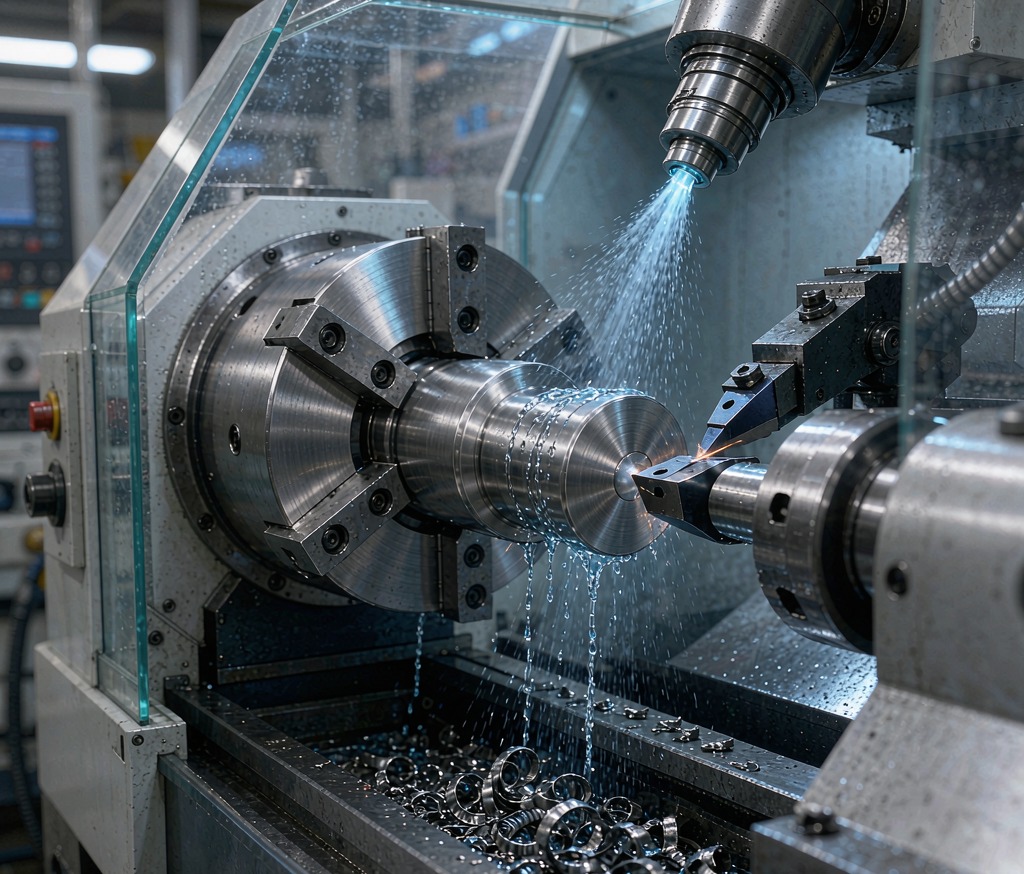
Understanding 420 Stainless
420 is a 12–14% chromium martensitic stainless. Annealed, it is ductile and cuts like a medium-carbon steel. Through hardening (oil or air quench plus temper) it reaches HRC levels that need carbide or grinding to finish. Its carbon content is what gives hardness, but also what makes the hardened state abrasive. Our stainless fabrication cell runs 420 alongside 304 and 316 for corrosion-minded programs.
Annealed vs Hardened Machining
Always rough in the annealed condition. Use coated carbide or even high-quality HSS for lighter work, with plenty of coolant to control the hardened skin that forms if you let the tool rub. Leave a small finish allowance, then send the part for heat treatment. After hardening, finish critical faces by grinding or hard turning. This sequence is the same discipline behind our CNC turning of hardened shafts.
Tool Selection
For annealed 420, TiAlN-coated carbide end mills and inserts give the best edge life. In hardened 420, step up to premium coated carbide, ceramic or CBN for finishing, or plan grinding for the finest surface. Keep setups rigid and avoid interrupted cuts on the hardened part. The approach aligns with our broader CNC machining services for stainless families.
Speeds, Feeds and Coolant
Annealed 420 mills around 30–60 m/min and turns around 60–120 m/min with moderate feeds; hardened 420 needs slower speeds and lighter depths. Flood emulsion coolant is essential to flush chips and suppress heat. Our CNC milling programmers set conservative starts and tighten only after the first article proves stable.
Finishing, Passivation and Corrosion
After machining, passivation restores the chromium-rich surface that protects 420 from rust — critical for medical and food contact. A bright machined finish also takes a polish for decorative edges. Skip passivation and even “stainless” 420 will stain in service. For comparison with sister grades, see our 304 and 316 machining guides.
Frequently Asked Questions
Can 420 be machined hard? Yes, but only with carbide, ceramic, CBN or grinding; roughing should happen annealed.
Why passivate 420? To rebuild the passive chromium layer that prevents rust, especially after machining removes the native surface.
Is 420 the same as 304? No. 420 is hardenable martensitic; 304 is austenitic and non-hardening but more corrosion resistant.
What coolant works? Flood emulsion, generous flow, to control heat and the work-hardened skin.
Ready to Start Your Project?
Get a build-ready quote on your custom metal parts within 24 hours. Share your drawing and our engineers will respond with process, lead time, and pricing.

