
Junction boxes protect electrical connections from dust, moisture, impact, and tampering. In industrial, solar, and infrastructure settings, the metal box itself is a critical safety component, not an afterthought. This guide covers how custom metal junction boxes are fabricated, which materials and seals to specify, and the standards that govern them so your install passes inspection the first time.
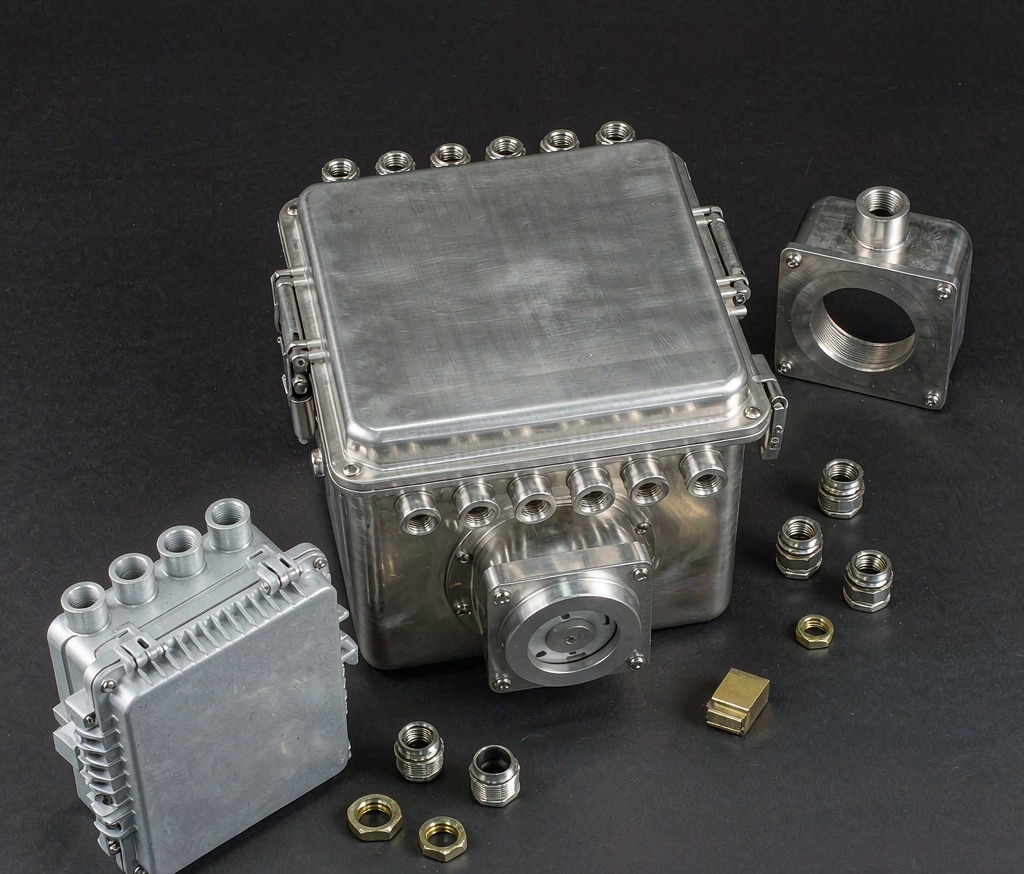
What a Junction Box Does
A junction box houses splices, terminals, and connectors, keeping live parts enclosed and accessible only to authorized service. The enclosure must stay sealed yet serviceable throughout its life. Our sheet metal laser cutting and CNC bending form precise box bodies from sheet stock with consistent dims that make field assembly predictable and fast for electricians.
Fabrication Methods
Most boxes start as laser-cut blanks folded on a press brake, then welded or fastened into a finished enclosure. TIG welding gives clean, airtight seams ideal for sealed duty, while CNC punching adds knockouts and holes efficiently across a batch. Related practice is detailed in our sheet metal enclosures guide, which covers design for folding and weld access.
Materials & Finishes
Stainless steel suits harsh or outdoor duty where rust is unacceptable; aluminum is lighter for many installs where weight matters. Powder coating and galvanizing defend against corrosion in demanding environments. Our custom metal enclosures article compares material and rating options so you can match the box to the site condition.
Sealing & IP Ratings
Gaskets, sealed lids, and conduit entries determine the IP rating of the enclosure. Machined or formed gasket channels must be consistent around the full perimeter. Our waterproof metal enclosures guide explains how IP66 and IP67 are achieved and verified, including the compression and groove details that separate a rated box from a leaky one.
Standards to Specify
NEMA and IEC slash IP ratings define environmental protection; UL listings may be required for North American installs and local codes. State the rating, knockouts, and mounting style clearly on the drawing to avoid a non-compliant box that fails inspection or, worse, exposes live parts. Reference the specific standard so the fabricator quotes to the right test.
Installation Efficiency
A well-designed box speeds installation as much as it protects the Circuit. Pre-placed DIN rails, accurate knockouts, and consistent hole patterns let electricians work quickly and avoid field drilling that compromises the seal. Share your internal layout with the fabricator so features land where the components actually sit, turning a generic enclosure into a purpose-built, install-ready assembly.
Spares & Lifecycle Management
For fleets of sites, standardize on a small set of box designs and keep the fabricator’s setup on file for fast reorders. Years later, when a box is damaged, an identical replacement avoids retrofit and inspection surprises. Document the rating and finish so any future buyer or inspector can confirm compliance without reverse-engineering the original specification from a faded label.
Working With Your Supplier Early
Bring the enclosure fabricator in with your internal layout, not just an outer dimension, so knockouts, rails, and holes land where the components actually sit. This turns a generic box into a purpose-built assembly that electricians install in minutes. Early collaboration also lets the shop recommend a standard size or shared design across sites, simplifying spares and inspection while reducing the per-unit cost through repetition rather than compromise.
Documentation & Compliance
Keep the rating, finish, and material records with each box type so any future inspection or reorder is straightforward. A fabricator who provides batch-level documentation makes your compliance audit painless and lets a damaged unit be replaced identically years later. Treat the enclosure as a qualified safety component, and your electrical system will stay inspectable and defensible across its entire service life.
Getting Started on Your Enclosures
Start by sending the internal layout alongside the outer dimensions so the fabricator can place knockouts and rails where they belong. Confirm the required rating and finish in writing, and request a first-article sample before the full run. With those basics settled, you get an install-ready enclosure that passes inspection the first time and can be reordered identically for years, which is exactly what a growing installed base demands.
Planning for the Full Lifecycle
Think beyond the first install to the tenth-year replacement. Standardizing designs, keeping setups on file, and requiring batch documentation means a damaged enclosure can be replaced with an identical unit, avoiding retrofit and re-inspection. This lifecycle view turns a simple metal box into a dependable, auditable part of your infrastructure that inspectors and maintenance teams can trust for the long haul.
Customization Options
Cutouts for connectors, DIN rails, viewing windows, and cable glands are all achievable through combined cutting, bending, and welding. Early coordination with the fabricator prevents field rework that electricians bill by the hour. Provide a layout of internal components so the shop can place knockouts and rails where they actually land, not where they guess.
Production Considerations
For repeat installs, standardize one box design across sites to simplify spares and inspection. A fabricator who keeps your tooling and setup on file can ship replacements that match the originals exactly, avoiding the dimensional drift that complicates maintenance years later when the first supplier has moved on.
Frequently Asked Questions
Stainless or aluminum junction box?
Stainless for corrosive or hygienic duty; aluminum with coating for lighter general use where weight or cost is the constraint.
What IP rating do I need outdoors?
IP65 plus for weather-protected; IP66 or IP67 for hose-down or temporary immersion exposure depending on the site.
Can boxes be made to my drawing?
Yes. Laser cut, bent, welded, and finished to your dimensions, knockouts, and finish specification without redesigning the part.
How are waterproof seals verified?
Through gasket compression design and, where required, pressure or spray testing per the declared rating before the batch ships.
Ready to Start Your Project?
Get a build-ready quote on your custom metal parts within 24 hours. Share your drawing and our engineers will respond with process, lead time, and pricing.

