
Electronic devices keep shrinking while packing more processing power, and that makes unwanted electromagnetic interference (EMI) and radio-frequency interference (RFI) a board-level reliability problem. Custom EMI RF shielding metal parts isolate sensitive circuits, protect wireless modules, and keep a product inside its compliance envelope. This guide explains the materials, manufacturing routes, and design choices that determine shielding effectiveness so you can brief a supplier with confidence.
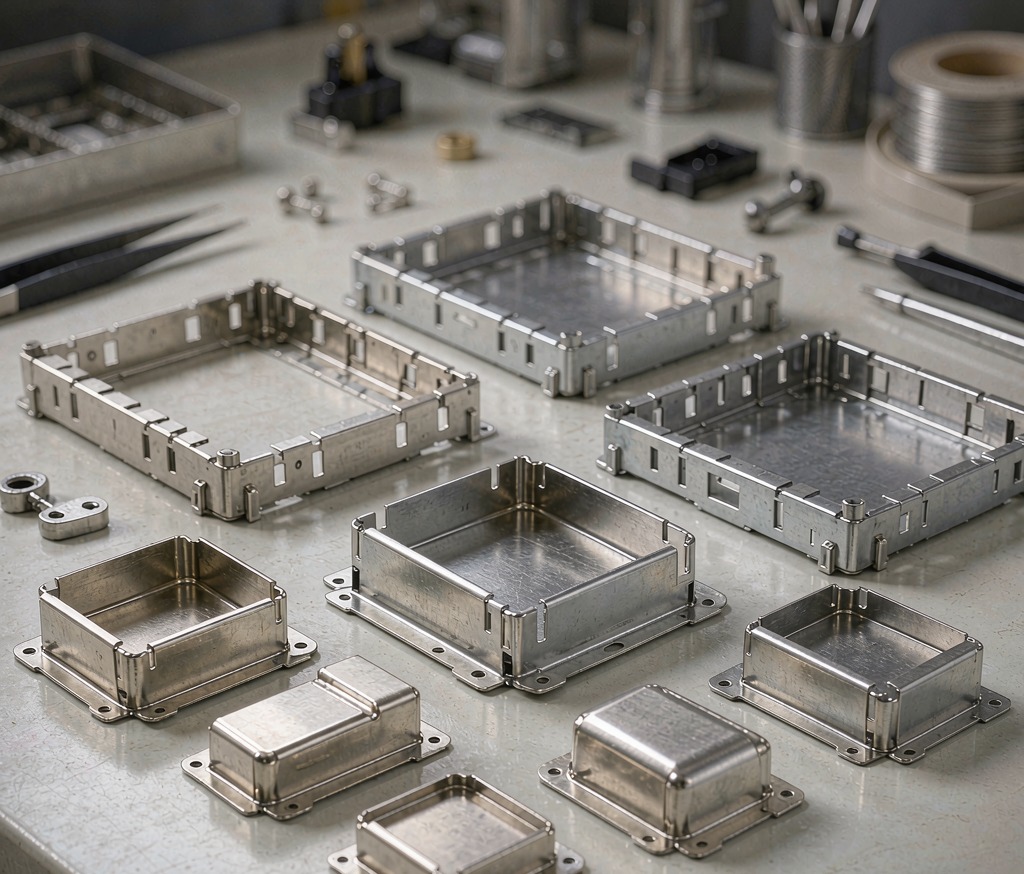
What Are EMI and RF Shielding Metal Parts?
An EMI/RF shield is a formed metal enclosure or frame that surrounds a noisy or noise-sensitive component on a printed circuit board. One-piece shielding cans are soldered directly to the board; two-piece designs add a removable cover for testing and rework. These parts are standard in smartphones, routers, automotive ECUs, medical electronics, and IoT modules. When you need a tight, repeatable fit, our sheet metal laser cutting and CNC bending lines produce shields with consistent flatness and clean edges.
Common Shielding Materials
Material choice trades conductivity, solderability, and cost. Nickel silver (alloy 770) resists oxidation and can be soldered without plating. Tin-plated steel is the low-cost workhorse for high-volume stamping. Brass and copper deliver the best conductivity for high-frequency attenuation, while beryllium copper is used for spring fingers and clip-on lids that must hold tension over thousands of cycles. Stainless steel appears in ruggedized industrial and automotive builds where strength matters more than solderability. You can review our zinc plating and anodizing options to match the finish to your signal and environment.
How Shielding Parts Are Manufactured
Most commercial shields are made by progressive-die stamping, which keeps per-part cost low at volume. Deep drawing forms seamless enclosed cavities, and sheet metal processing cuts intricate vent patterns and grounding fingers without hard tooling. For low-volume or highly complex geometries, CNC punching and precision forming deliver the needed accuracy. As we cover in our stamping vs die casting comparison, stamping wins on cost while machining wins on complexity.
One-Piece vs Two-Piece Shield Designs
A one-piece shield is the most economical permanent solution, but it traps the component beneath a soldered lid. A two-piece fence-and-cover design lets engineers pop the top for tuning or field service without desoldering the frame. If your product will be serviced or iterated, specify snap-fit retention walls and dimples up front. Our custom metal fabrication team helps translate PCB envelopes into manufacturable shield layouts.
Surface Finishing and Plating
Finish affects both solderability and shielding continuity. Tin plating is the default for automated reflow; nickel or gold plating suits military, aerospace, or low-resistance links. Anti-oxidation treatment keeps nickel silver solderable in storage. Pair the right zinc plating with a clean stamped body and you get a shield that performs on the first pass. See our overview of metal surface treatment for the full finishing menu.
Standards, Compliance, and Quality
Shielding effectiveness is verified by shielded-box, reverberation-chamber, or planar-material tests. RoHS and REACH restrict plating chemistries, and automotive programs often demand IATF 16949. Ask for dimensional CMM reports and, where relevant, EMI test data. Our material selection guide explains how material selection interacts with regulatory limits.
How to Choose the Right Shielding Partner
Look for a shop that offers DFM feedback, fast sampling (days, not weeks), and scalable tooling from prototype to millions. Share your PCB outline, stack height, and target frequency band, and a good supplier returns a stamped or machined proposal with cost curves. Start the conversation with our precision metal stamping and we will scope the shield to your board.
Our stamping vs CNC machining covers the trade-offs between stamping and CNC so you can pick the right route before tooling.
Frequently Asked Questions
What is the difference between EMI and RF shielding?
EMI shielding addresses short-range high-frequency emissions; RFI shielding targets longer-wavelength radio interference. In practice the terms overlap, and most EMI/RF shields block both by reflection and absorption.
Which material gives the best shielding?
Copper and brass attenuate best, but nickel silver and tin-plated steel are more common because they solder easily and cost less. The best choice depends on frequency, volume, and assembly method.
How fast can I get prototype shields?
With laser cutting or CNC punching, samples can be turned around in roughly 3-7 days; hard-tooled stamping adds tooling lead time but drops unit cost sharply above a few thousand pieces.
Do I need plating on a stainless shield?
Stainless is strong and corrosion resistant but not naturally solderable; tin or nickel plating is usually required for reflow assembly.
Partner With a Shielding Specialist
From a single prototype can to a million-piece automotive run, the right process and material decide whether your board passes EMI testing the first time. Send us your PCB envelope and target frequencies and we will return a build-ready quote.
Ready to Start Your Project?
Get a build-ready quote on your custom metal parts within 24 hours. Share your drawing and our engineers will respond with process, lead time, and pricing.

