
Two high-volume forming routes compete for brackets, flanges, and structural parts: metal stamping vs forging. Stamping shears and bends flat stock in a die; forging compresses heated or cold metal to flow the grain. The difference shows up directly in strength, cost, and the kind of geometry each can produce, and getting it wrong means either a part that fails in service or a die you did not need.
Process Overview
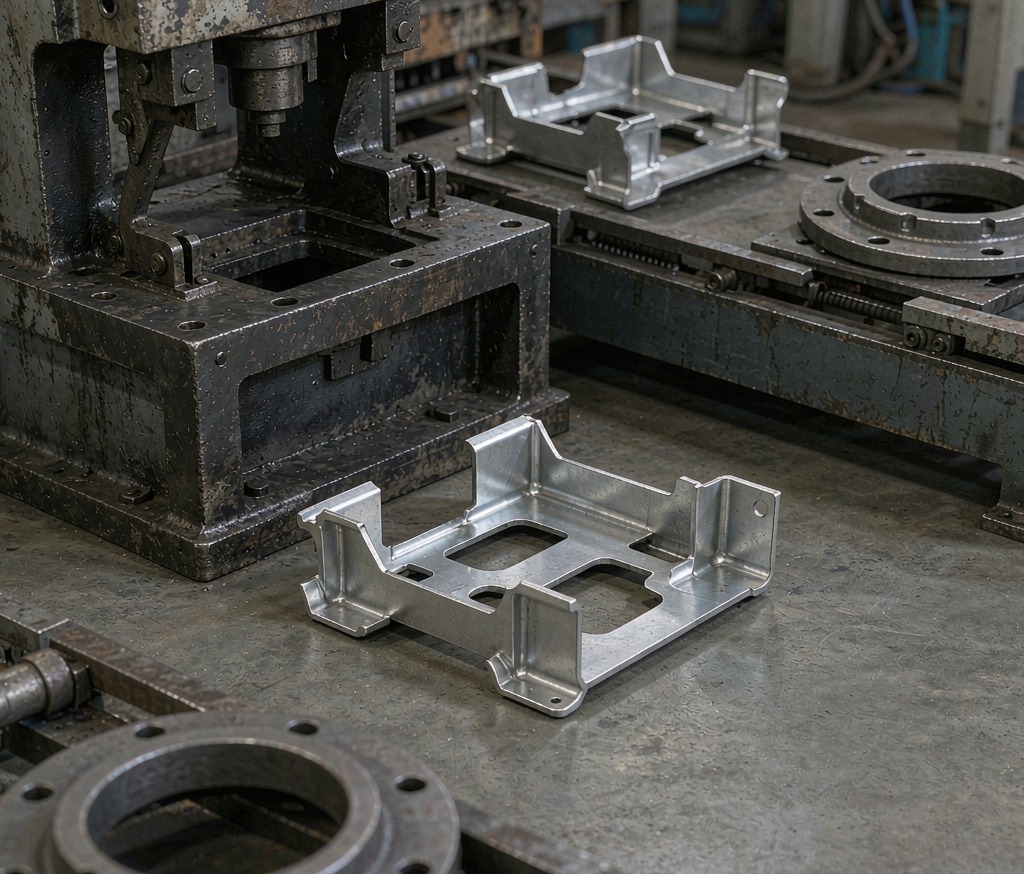
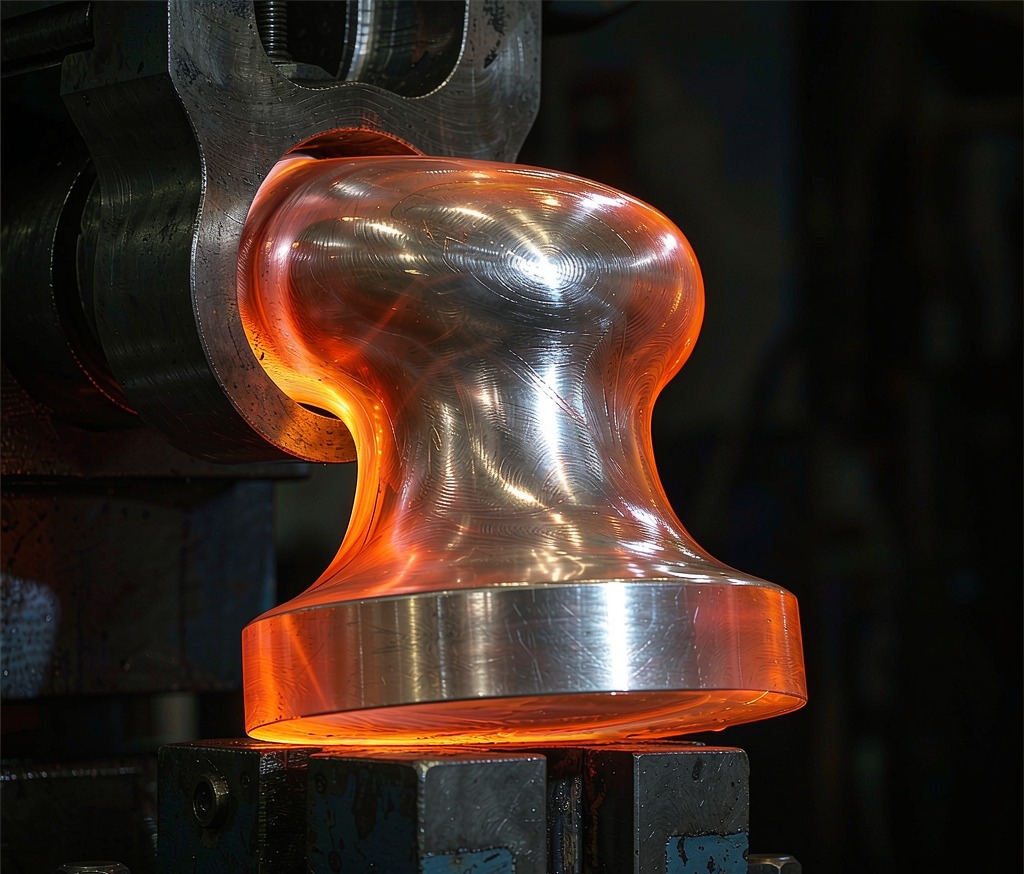
Metal stamping uses a press and die to cut, bend, or draw sheet and strip in fractions of a second. Hot forging and cold forging squeeze bar or billet between dies so the metal’s grain follows the part contour, building continuous fiber flow that wraps around load paths instead of being severed.
The core trade is fiber continuity. Stamping is fast and cheap but cuts the sheet’s grain at every edge; forging is slower and dearer but aligns the grain with the shape, which is why forged crankshafts and linkage arms survive millions of load cycles.
Grain Flow and Mechanical Strength
Forging’s greatest advantage is grain flow. Because the metal is compressed rather than cut, fibers wrap around contours, giving forged parts superior fatigue strength and impact resistance — critical for precision stamped alternatives in load-bearing roles. Stamping severs the sheet’s grain at every cut edge, which is fine for non-structural brackets but weaker under cyclic load where a crack can start at a sheared edge.
Tooling and Setup Cost
Stamping dies are relatively low cost for simple blanks and scale beautifully with progressive die stamping that combines cut, form, and pierce in one strip. Forging dies, especially for hot work, cost more and wear faster. At very high volume, both amortize well, but stamping typically reaches break-even sooner for light parts where press tonnage is modest.
Production Volume
Both are mass-production methods. Stamping is unbeatable for millions of identical thin clips and shields. Forging suits tens of thousands to millions of stronger components such as warm forged hubs and arms where strength justifies the die investment and the part’s mass repays the press energy.
Material and Thickness
Stamping is limited to sheet and strip thickness; forging handles solid sections from a few mm to massive forgings. For a thick, strong, safety-critical part, forging is usually the only option, while a thin cover is almost always stamped. Our hot forging and cold forging pages explain the temperature choice within forging itself.
How to Choose
Pick stamping for thin, high-volume, non-structural or lightly loaded parts. Pick forging when fatigue, impact, or solid cross-section strength matters. Our forging vs casting and forging vs machining guides cover the wider decision tree, and hot vs cold forging narrows the forging choice by temperature and tolerance.
Cost Modeling at Scale
The honest way to compare them is a break-even chart against annual volume. Stamping’s per-piece cost falls fast once the progressive die is paid for, while forging’s heavier die spreads over fewer but stronger parts. Plot both curves and the crossing point tells you which route owns the program at your forecast quantity.
Do not forget scrap and yield. Stamped skeletons generate web scrap that can be recycled, but forged flash and gutters also reclaim well; the bigger variable is rejection rate on a safety-critical forged part, which is why forging vs machining trade studies often include inspection cost, not just material.
Secondary Operations Matter
Neither process delivers a finished part alone. Stamped blanks usually need deburring, piercing of final holes, and sometimes welding; forged parts need machining of datums and often heat treatment beyond the forge. When you compare total cost, include these downstream steps, because a cheap stamp can become expensive after three secondary ops.
Forging’s near-net shape means less material to remove in machining, which shortens the most expensive finishing step. That is why a forged and machined arm can still beat a stamped and heavily machined one when the geometry is thick and the volumes are mid-range rather than mass-market.
Environmental and Scrap Factors
Forging generally uses material more efficiently on thick parts because it flows metal to shape rather than shearing it away, while stamping’s skeleton scrap is larger but easier to recycle. If your program reports embodied carbon, include the forge yield and the stamping scrap rate in the comparison so the decision reflects both cost and sustainability goals honestly.
Design for the Process Early
The biggest savings come from designing the part for the process before tooling is cut. Stamped parts want uniform wall and simple bends; forged parts want generous fillets and symmetric sections that let the grain flow without laps. Involve the supplier at the CAD stage so the geometry is tuned to the die rather than fought by it, and the unit cost drops before the first quote is even finalized.
FAQ
Which is stronger?
Forging, because grain flow follows the contour instead of being cut by a die at every edge.
Is stamping cheaper at volume?
Yes for thin parts — stamping dies amortize faster than forging dies at high quantity and run in milliseconds.
Can forged parts be stamped afterward?
Not usually; forged blanks are machined or machined from forged stock rather than stamped, since they are already solid sections.
Ready to Start Your Project?
Get a build-ready quote on your custom metal parts within 24 hours. Share your drawing and our engineers will respond with process, lead time, and pricing.

